


Religious architecture has driven builders to push physical limits for centuries. Communities around the globe have raised houses of worship inside deep river canyons, atop jagged volcanic needles, and within massive underground caves. These structures reflect regional faiths, local folklore, and bold engineering choices that continue to capture global attention.
In Moscow, Tsar Ivan IV ordered the construction of Saint Basil’s Cathedral between 1555 and 1561 to mark the military victory over the Khanate of Kazan. Architect Postnik Yakovlev designed the multi-tented structure with nine distinct chapels, topped by brightly colored onion domes that dominate Red Square. Popular legends claimed the tsar blinded the builder so he could never replicate the masterpiece, though historical records show Yakovlev worked on later municipal projects.
Remote landscapes inspired equally ambitious designs across northern Europe. In Reykjavík, Iceland, architect Guðjón Samúelsson began drafting plans for the Church of Hallgrímur in 1937. Workers broke ground in 1945 on the Lutheran parish church, pouring heavy concrete into stepped basalt columns that mimic local volcanic geology. Construction dragged on for thirty-eight years, finally wrapping up in 1986 and leaving a concrete monument that stands 74.5 meters tall near the Atlantic coast.
South America houses dramatic engineering feats of its own. Builders initiated Las Lajas Cathedral in 1916 inside the steep canyon of the Guaitara River in the southern Colombian state of Nariño. Workers suspended the stone sanctuary directly over the rushing water inside a gorge where locals reported historical sightings of the Virgin Mary. Down in Spain, Antoni Gaudí took over the design of the Sagrada Família in Barcelona during 1883, embedding complex geometric forms and organic pillars into a Roman Catholic basilica that continues construction to this day.
Modern designers experimented with radical shapes during the mid-twentieth century. Le Corbusier completed Notre Dame du Haut in Ronchamp, France, in 1954, shaping a curved concrete roof that channels rainwater into an exterior stone fountain. In Rome, architect Richard Meier finished the Jubilee Church in 2003, utilizing massive curved panels made from titanium dioxide cement to actively break down urban air pollution when exposed to ultraviolet light.
#1 The Church of Hallgrímur (Reykjavík, Iceland)
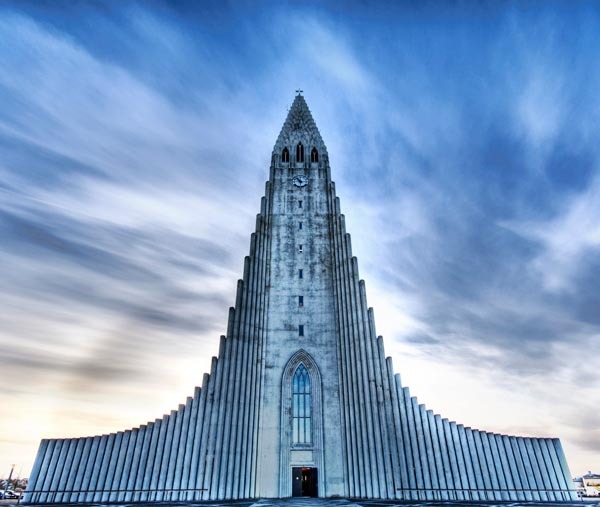
Architect Guðjón Samúelsson began drafting plans for the Lutheran parish church in Reykjavík during 1937. Workers broke ground in 1945, pouring heavy concrete into stepped basalt columns that mimic local volcanic geology. Construction dragged on for thirty-eight years, wrapping up in 1986. The soaring tower reaches 74.5 meters in height, making it the fourth tallest architectural structure in Iceland and a dominant landmark near the Atlantic coast.
#2 Las Lajas Cathedral (Colombia, South America)
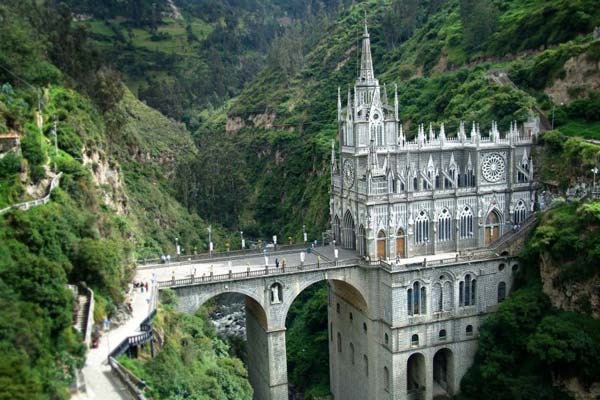
Builders initiated this stone sanctuary in 1916 inside the steep canyon of the Guaitara River in the southern Colombian state of Nariño. Workers suspended the Gothic revival structure directly over rushing water inside a gorge where locals reported historical sightings of the Virgin Mary. The dramatic engineering feat connects two sides of the canyon with a massive bridge, drawing pilgrims from across South America to the remote municipality of Ipiales.
#3 Device to Root Out Evil (Calgary, AB, Canada)
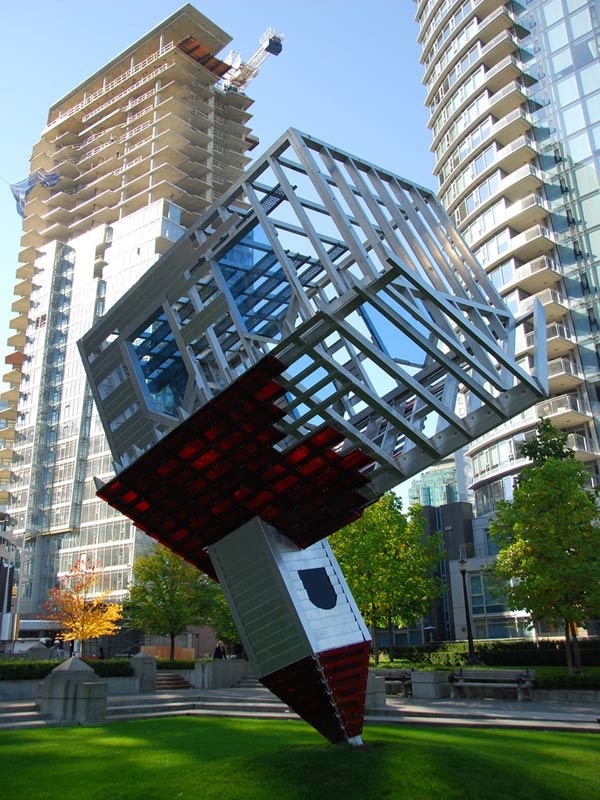
Artist Dennis Oppenheim designed this controversial sculpture depicting a traditional New England church balancing upside down on its steeple. Originally installed in Vancouver, public outcry and zoning debates forced its removal from the west coast. Transported to Calgary in 2008, the striking artwork challenges conventional perceptions of sacred spaces. The inverted wooden structure relies on a heavy steel internal frame to maintain its gravity-defying pose in an urban park.
#4 Shell Church (Huntington Beach, CA, USA)
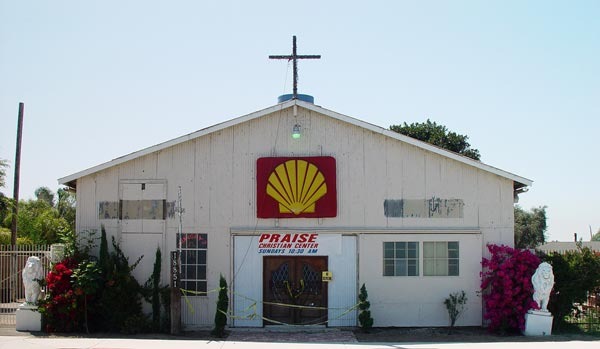
Situated in Huntington Beach, California, this coastal building features a distinct commercial petroleum brand logo integrated directly into its structural identity. Mid-century modern designers often incorporated corporate branding into everyday roadside architecture along California highways. Local motorists navigating Pacific Coast Highway utilized the prominent seashell emblem as a reliable navigational marker for decades. The unorthodox union of oil company imagery and a house of worship reflects postwar consumer culture.
#5 Notre Dame du Haut (Ronchamp, France)
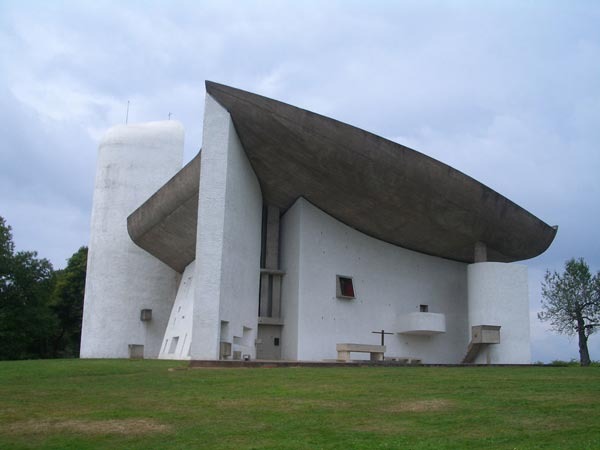
Swiss-French architect Le Corbusier completed this revolutionary chapel in Ronchamp during 1954. Thick masonry walls salvaged from a previous church destroyed during World War II form the core of the curving structure. A heavy concrete roof sits slightly apart from the walls, allowing a sliver of natural light to illuminate the dark interior. Rainwater cascades off the slanted roofline directly into a massive stone fountain positioned below the eastern facade.
#6 St Joseph Ukrainian Catholic Church (Chicago, IL, USA)
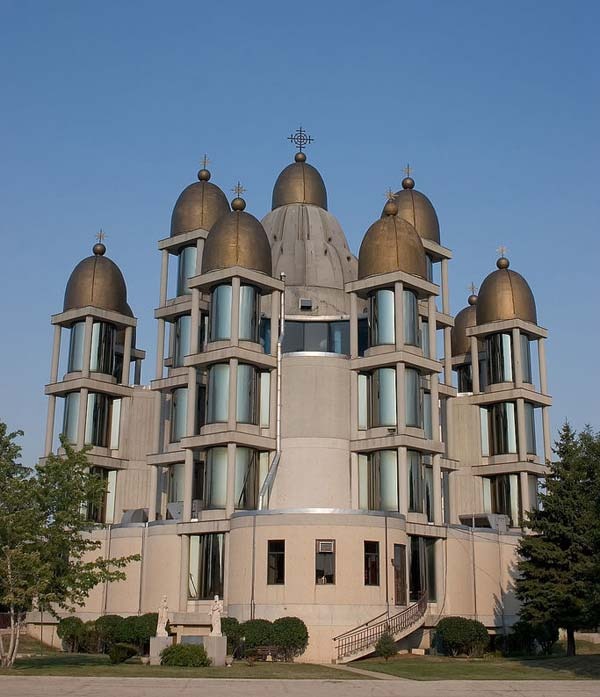
Located in Chicago, this Ukrainian Catholic parish displays a striking cluster of golden onion domes rising above an urban neighborhood. Byzantine architectural traditions heavily influenced the exterior design, symbolizing heavenly flames and spiritual devotion. Immigrant communities erected such traditional structures across the American Midwest to preserve their cultural heritage and religious practices. Intricate mosaics and woodwork fill the sanctuary interior, serving generations of faithful parishioners since its founding.
#7 Jubilee Church (Rome, Italy)
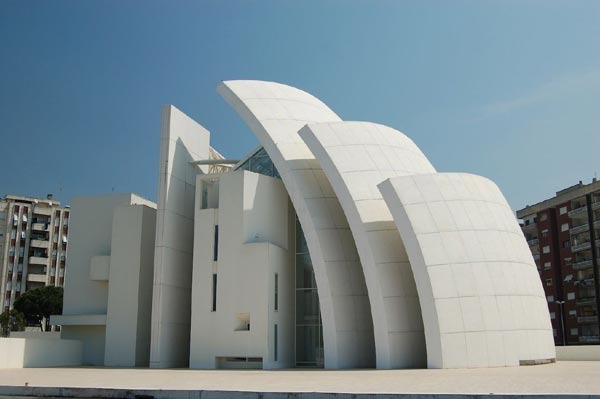
Architect Richard Meier finished this striking Roman parish in 2003 as part of a church revitalization program. Three massive curved walls made from precast concrete panels dominate the exterior composition. These geometric shields utilize titanium dioxide cement to actively break down urban air pollution when exposed to ultraviolet light. Large glass skylights flood the main worship hall with natural illumination, creating a bright modern sanctuary on the eastern edge of the city.
#8 Grace Fellowship Baptist Church (Baltimore Road in Detroit, Michigan, USA)
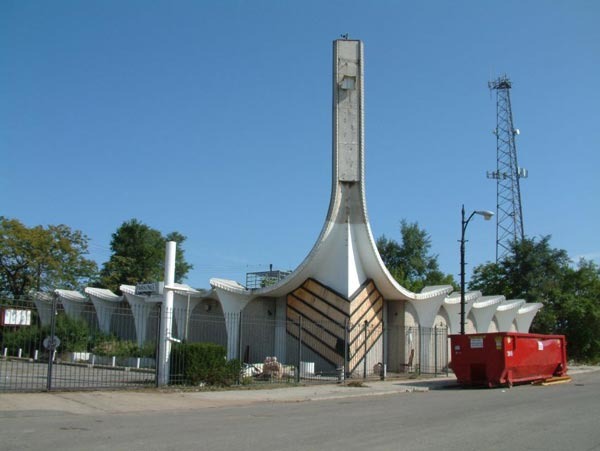
Urban neighborhoods across Detroit witnessed significant demographic and architectural shifts throughout the twentieth century as congregations adapted existing commercial or residential buildings into worship spaces. Baltimore Road accommodated various community groups seeking affordable housing for their religious gatherings. Local ministers established fellowship halls to serve neighborhood residents facing industrial decline and economic hardship. Modest brick facades and hand-painted signs often marked these grassroots centers of spiritual support and local organization.
#9 Basilica de Higuey (Dominican Republic)
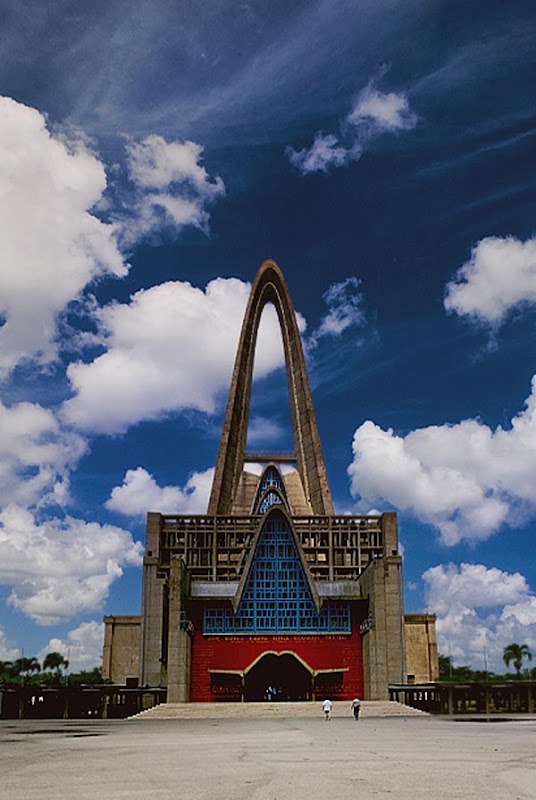
French architects Pierre Dupré and Étienne Bolle designed this massive concrete basilica in Higüey, completing construction in 1971. The soaring parabolic arch reaches seventy-five meters in height, creating an imposing silhouette against the Caribbean skyline. Pope Paul VI elevated the church to the status of a minor basilica, honoring the holy image of Our Lady of Altagracia housed inside. Thousands of pilgrims arrive annually on January twelfth to celebrate national religious festivals.
#10 Church in Stykkishólmskirkja (Iceland)
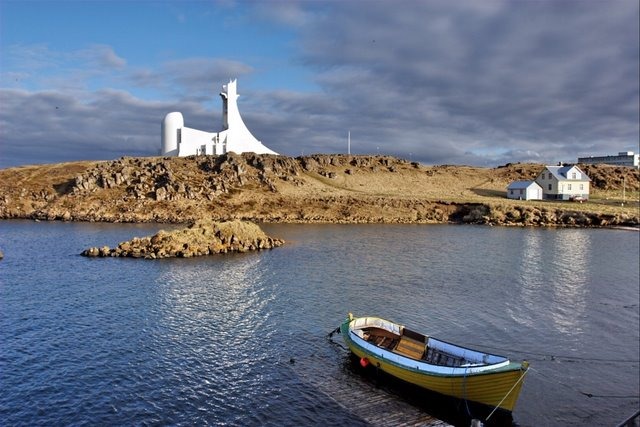
Perched atop a hill overlooking the Breiðafjörður fjord, this modern Lutheran church dominates the coastal fishing town of Stykkishólmur. Architect Jón Haraldsson designed the futuristic concrete structure, completing construction in 1990. Large vertical windows channel natural light across the minimalist interior, while the sweeping exterior lines resemble the skeletal remains of a giant marine creature. The building hosts local community gatherings and musical concerts throughout the long Nordic winters.
#11 St. Basil’s Cathedral (Moscow, Russia)
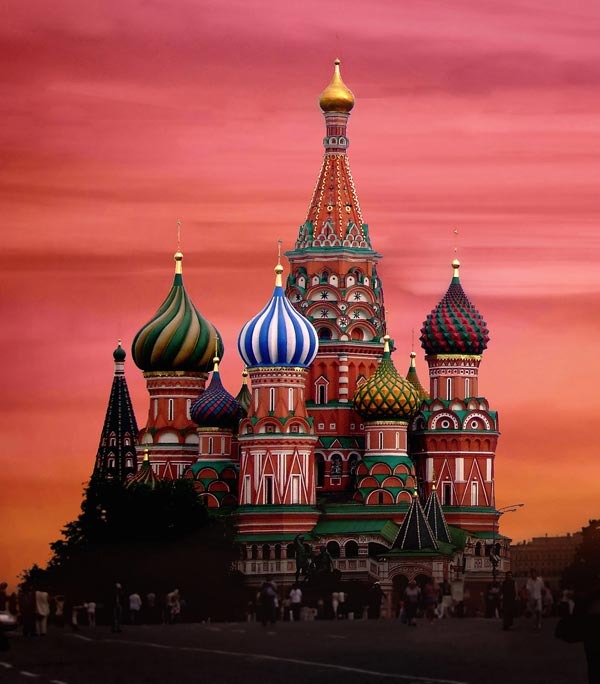
Tsar Ivan IV ordered the construction of this iconic cathedral on Red Square between 1555 and 1561 to celebrate military victories. Architect Postnik Yakovlev designed the multi-tented complex with nine distinct chapels, topped by brilliantly colored onion domes. Popular myths alleged the tsar blinded the builder so he could never replicate the masterpiece, though municipal records prove Yakovlev worked on later projects. The colorful masonry structures survived numerous fires and Soviet demolition plans.
#12 Cathedral of Rio de Janeiro (Brazil)
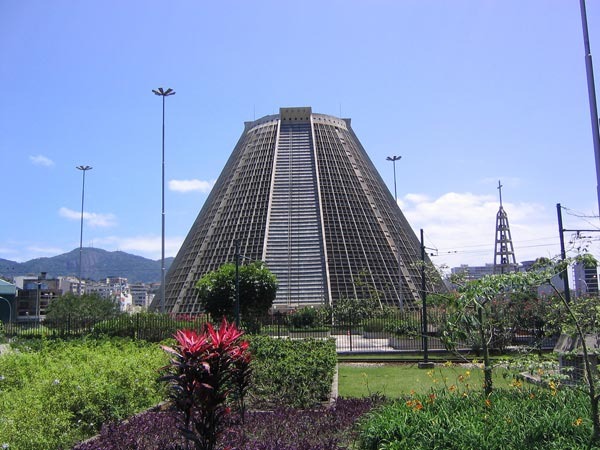
Architect Edgar Fonseca completed this colossal conical cathedral in downtown Rio de Janeiro during 1979. Inspired by Mayan pyramid architecture, the towering structure stands seventy-five meters tall with an internal diameter of one hundred meters. Four massive stained glass windows stretch from floor to ceiling, casting colored light across the vast concrete interior. The cavernous worship hall accommodates thousands of standing and seated worshippers during major Catholic celebrations.
#13 Sagrada Família (Barcelona, Spain)
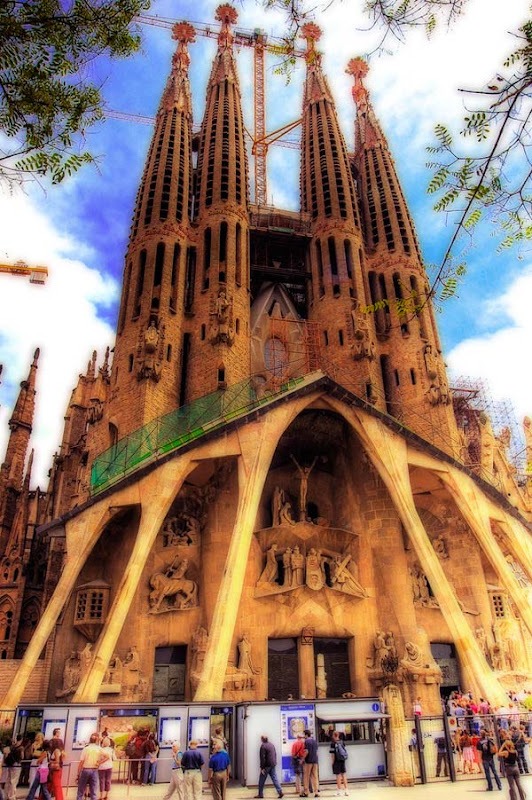
Antoni Gaudí took over the design of this Roman Catholic basilica in Barcelona during 1883, embedding complex geometric forms and organic pillars into the stone structure. Construction continues to this day, relying on private donations and visitor ticket sales to fund the immense engineering undertaking. Intricate nativity facades depict biblical scenes using hyper-realistic stone carvings, while soaring hyperbolic vaults support the towering central spires reaching toward the Mediterranean sky.
#14 Paraportiani Church (Mykonos, Greece)
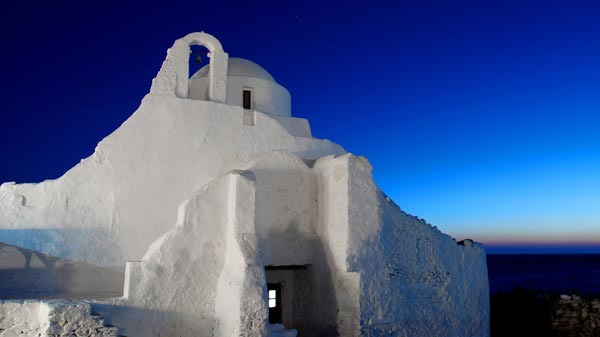
Builders constructed this asymmetrical white church complex over several centuries on the island of Mykonos. Five distinct small churches comprise the lower level, while a sixth church sits directly above them on the upper terrace. Whitewashed lime plaster coats the ancient masonry walls, protecting the porous stone from salty Aegean sea spray and harsh coastal winds. The organic curves and stacked chapels represent classic Cycladic architectural traditions developed by local island masons.
#15 Borgund Stave Church (Lærdal, Norway)
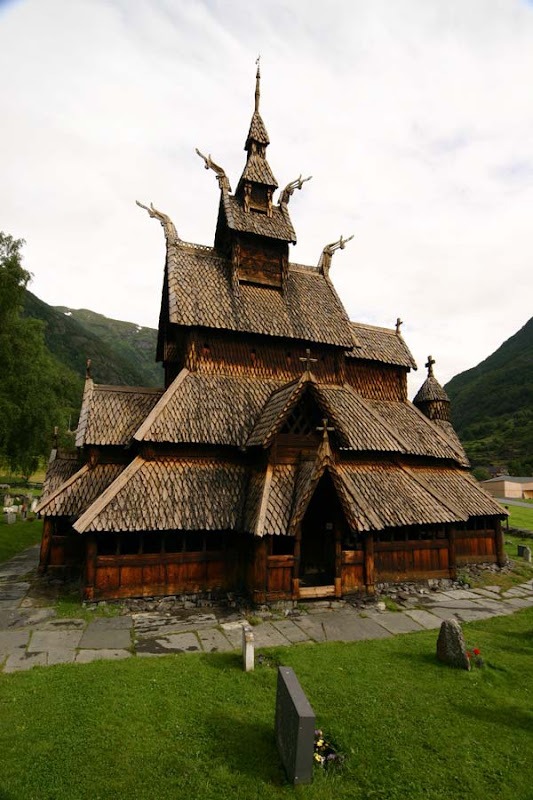
Medieval carpenters built this remarkable wooden stave church in Lærdal around 1180 without using a single metal nail. Pine timber frames interlock vertically and horizontally, creating a durable structure protected by overlapping wooden shingles. Dragon head carvings decorate the steep gable roofs to ward off evil spirits according to ancient Norse folklore. Open galleries wrap around the exterior walls, shielding the ancient tar-treated timber from heavy mountain snowfalls.
#16 The Green church (Buenos Aires, Argentina)
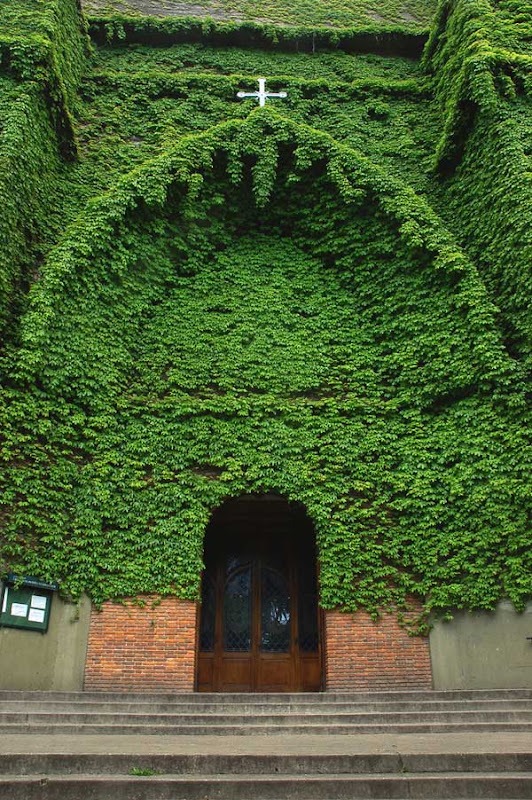
Lush ivy and climbing vines completely envelop the exterior stone walls of this urban chapel in Buenos Aires. Local gardeners and parishioners cultivated the dense botanical covering over decades, creating a living green facade that changes color with the seasons. The organic layer provides natural insulation against summer heat while absorbing urban noise from nearby city streets. Hidden Gothic windows peek through the thick foliage, blending traditional ecclesiastical design with urban botany.
#17 Church Ruins (Goreme, Turkey)
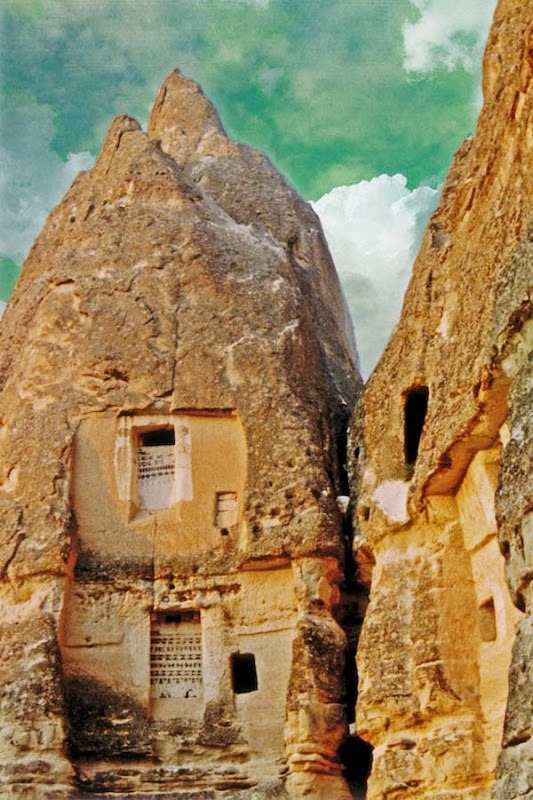
Early Christian monks carved numerous churches directly into the soft volcanic tuff rock formations of the Göreme valley during the Byzantine era. Artisans excavated prayer halls, altars, and monastic quarters out of the stone pillars, painting detailed religious murals on internal cave walls using mineral pigments. Erosion eventually exposed these hidden sanctuaries to the open air, and hollowed-out stone facades remain visible across the dramatic landscape of central Turkey.
#18 Duomo, Milan Cathedral (Milan, Italy)
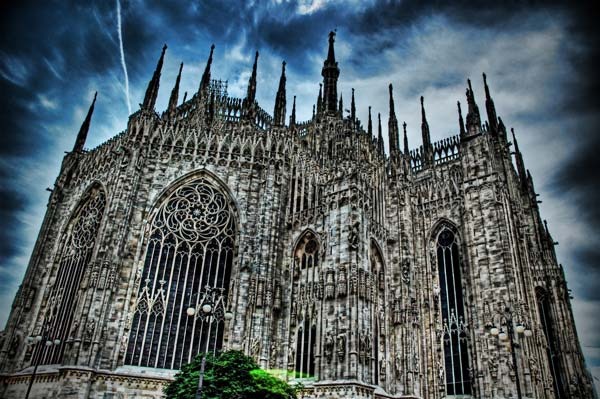
Construction on the sprawling Gothic cathedral in Milan began in 1386 under Archbishop Antonio da Saluzzo and spanned nearly six centuries. Countless stonecutters and architects contributed to the white marble facade, which features thousands of delicate spires and decorative statues. Napoleon Bonaparte received his coronation as King of Italy inside the nave during 1805. The massive roof bristling with marble pinnacles attracts millions of tourists and architectural historians annually.
#19 Paoay Church a.k.a St. Augustine Parish (Philippines)
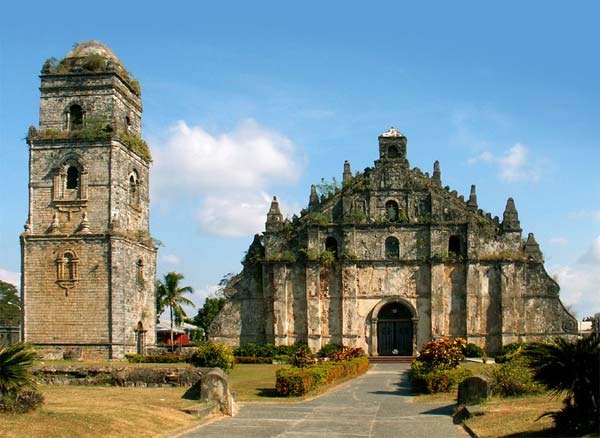
Spanish Augustinian friars completed this earthquake baroque church in the Ilocos Norte province during 1710. Massive coral stone blocks form the exterior walls, reinforced by twenty-four enormous buttresses that project outward to absorb violent tectonic tremors. Earthquakes destroyed earlier versions of the parish church, forcing builders to adopt an extremely heavy defensive style. A separate coral stone bell tower stands nearby, serving as a watchtower during historical conflicts.
#20 Cathedral of Brasilia (Brasilia, Brazil)
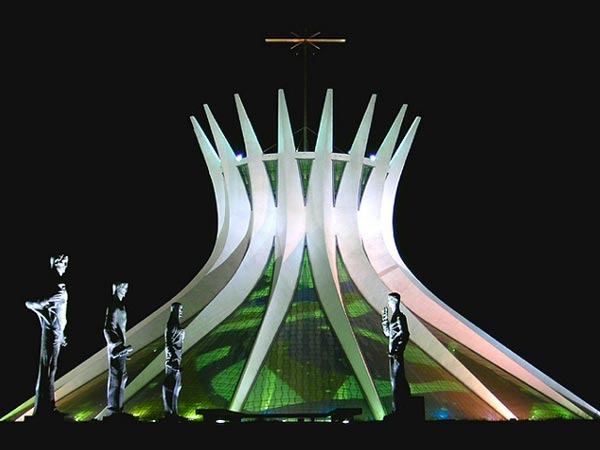
Another perspective of Niemeyer's modernist masterpiece highlights the sweeping parabolic curves of the exposed concrete ribs against the open sky. Visitors enter the sacred space through a dark underground tunnel, emerging into a vast, sunlit prayer hall below ground level. The radical design broke completely with traditional colonial church architecture found across South America. Engineers utilized innovative precast concrete techniques to erect the complex geometric structure within a harsh plateau climate.
#21 St. Michael’s Golden-Domed Monastery (Kiev, Ukraine)
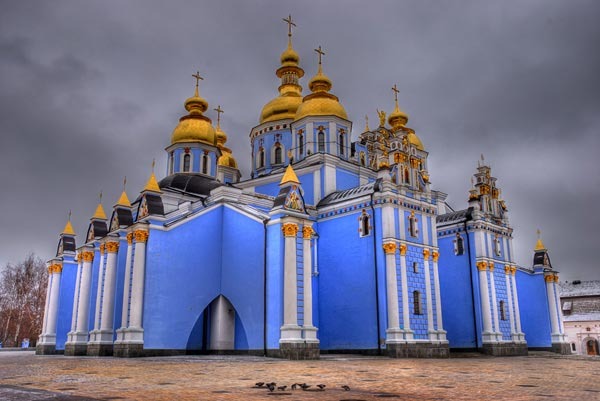
Prince Sviatopolk Iziaslavovych ordered the construction of this historic monastery in Kiev around 1108. Ukrainian craftsmen decorated the interior with magnificent mosaics and gold-leaf frescoes depicting biblical narratives. Soviet authorities demolished the medieval complex in the 1930s to clear space for government buildings, destroying centuries of sacred art. Following Ukrainian independence, government funds financed a complete physical reconstruction of the cathedral, reopening the golden-domed landmark in 1999.
#22 Church in a Hill (Luxembourg)
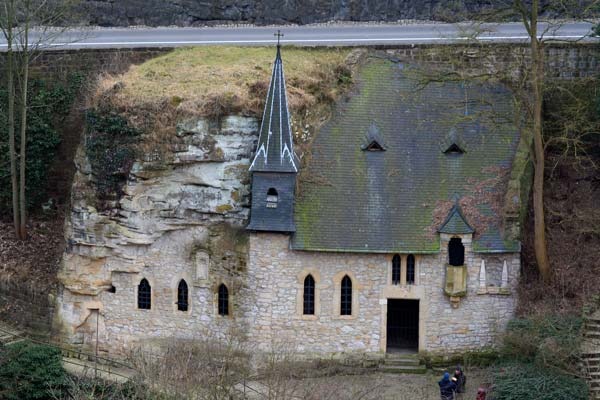
Military engineers and religious orders carved fortifications and chapels directly into the solid rock cliffs of the Bock promontory in Luxembourg City. The underground tunnels and stone chambers provided safe refuge for local populations during centuries of European warfare and sieges. Strategic positioning high above the Alzette River protected the sanctuary from invading armies. Overgrown vegetation now covers the ancient stone portals, blending medieval military engineering with the natural landscape.
#23 San Francisco de Asis Church (Ranchos de Taos, New Mexico)
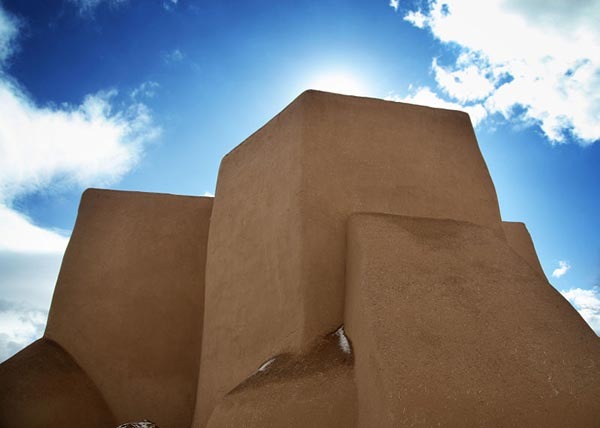
Franciscan friars and local Pueblo builders erected this adobe church around 1815 in Ranchos de Taos, New Mexico. Thick mud-brick walls absorb the extreme desert heat and provide structural stability against environmental wear. Parishioners gather every summer to apply a fresh layer of mud plaster, preserving the organic architectural finish. Countless modernist painters and photographers, including Georgia O'Keeffe and Ansel Adams, immortalized the iconic rear buttressed adobe forms on canvas and film.
#24 Pilgrimage Church (Neviges, Germany)
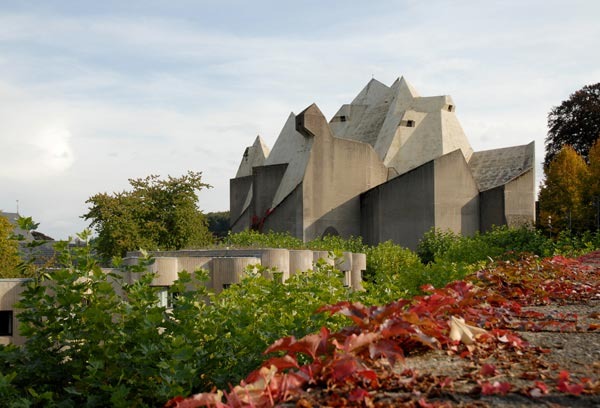
Architect Gottfried Böhm designed this brutalist concrete pilgrimage church in Neviges, completing construction in 1968. Jagged folded concrete planes form a massive angular roof structure that resembles a giant crystal tent or jagged mountain peak. The raw interior space accommodates thousands of Catholic pilgrims arriving for religious retreats and services. Heavy industrial materials and unconventional geometry replaced traditional church designs, creating an imposing architectural statement in the German hills.
#25 Church with an A (Madrid, Spain)
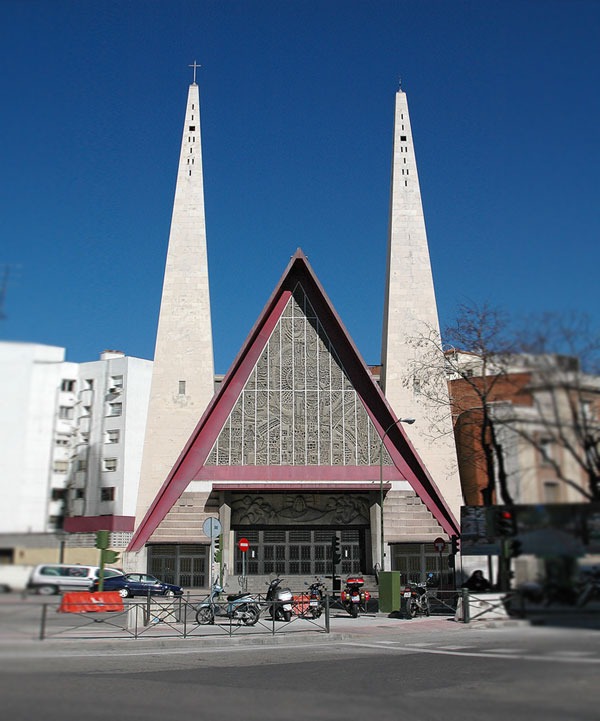
Contemporary urban planners and architects experiment with unconventional geometric footprints when designing modern parish spaces in European suburbs. This Madrid chapel incorporates a massive structural letter form into its primary facade, creating a distinct visual identity for local parishioners. Builders utilized precast concrete and steel frames to construct the sharply angled entrance. The bold architectural choice reflects late twentieth-century postmodern design trends applied to traditional neighborhood religious centers.
#26 Mr. Eko’s Church (The Island, near the beach camp)
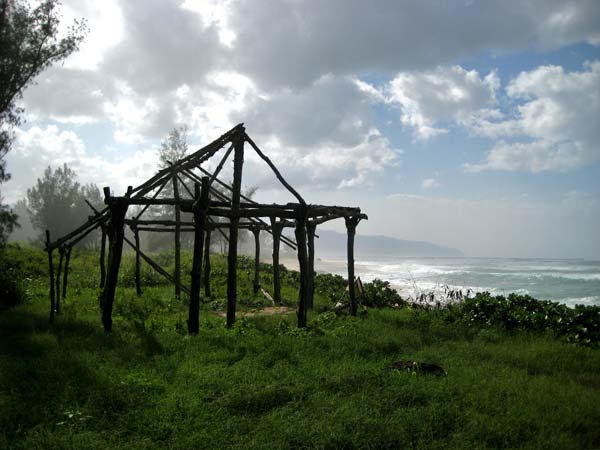
Television set designers constructed this fictional open-air jungle church for a popular dramatic television series filmed on location in Hawaii. Production crews utilized local wood, woven palm fronds, and salvaged aircraft debris to build the rustic tropical sanctuary. Characters gathered beneath the thatched roof to process personal trauma and spiritual conflict within a dangerous wilderness setting. The temporary outdoor structure captured viewer attention before production wrapped up and the set was dismantled.
#27 Grundtvig’s Church, (Copenhagen, Denmark)
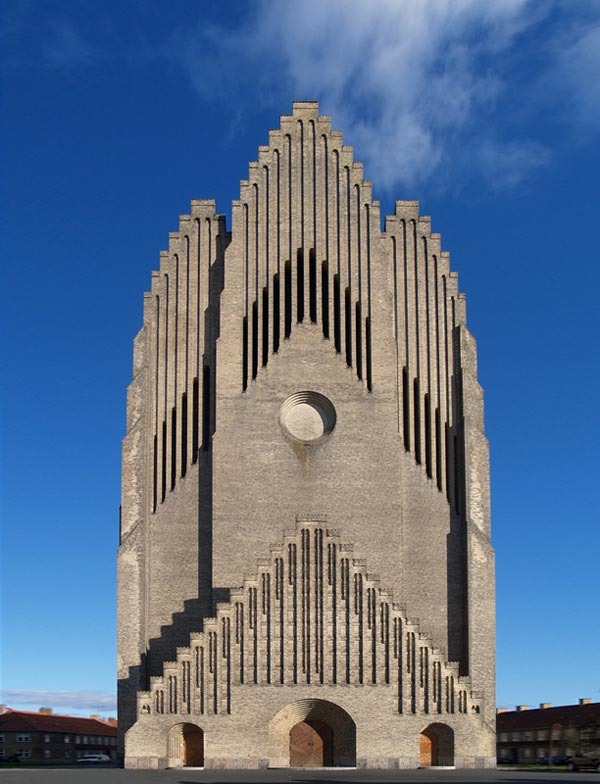
Architect Peder Vilhelm Jensen-Klint designed this expressionist masterpiece in Copenhagen, with construction running from 1921 until 1940. Yellow handmade bricks form the towering facade, mimicking the stepped gables of traditional Danish Gothic country churches. The massive western tower resembles a giant cathedral organ pipe formation, dominating the Bispebjerg residential district. Interior vaults soar high above wooden pews, creating a solemn, light-filled atmosphere that honors the legacy of theologian Nikolai Frederik Severin Grundtvig.
#28 Colonia Catholic Church (Uruguay, South America)
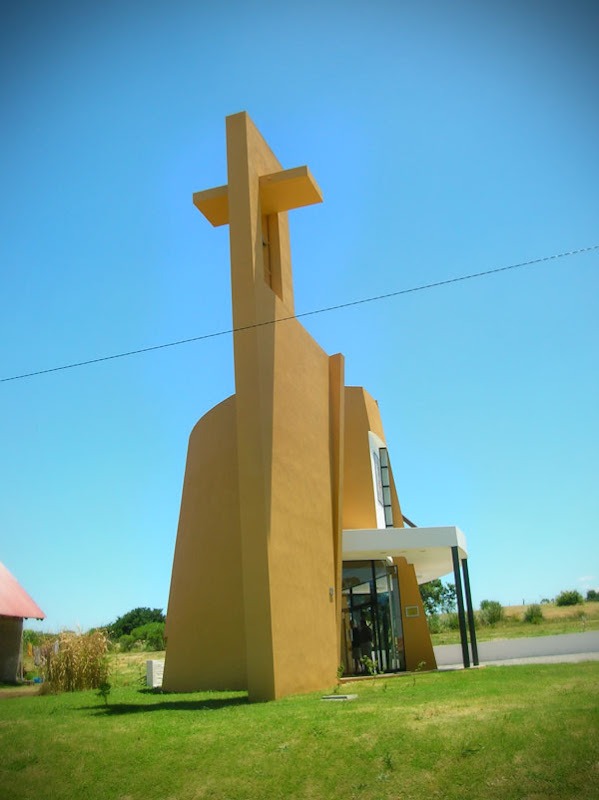
Eladio Dieste designed the Church of Christ the Worker in Atlántida, Uruguay, near Colonia, completing it in 1960. He used reinforced brick to build self-supporting undulating walls and a curved roof without modern steel beams. The structure relies on precise mathematical calculations of Gaussian vaults. Dieste built the complex using local laborers and inexpensive brick, creating a wide interior space that opened affordable architectural engineering to the South American countryside.
#29 The Felsenkirche a.k.a. Church of the Rock, (Idar-Oberstein, Germany).
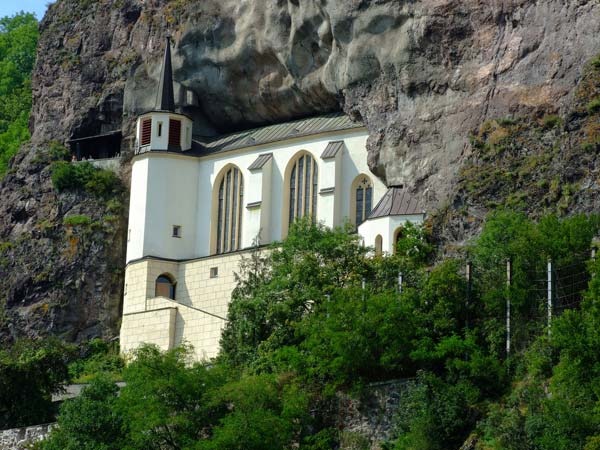
A close view of the Felsenkirche highlights how medieval masons inserted gothic stone arches directly into the porous natural cliff. Construction workers carved passages through solid rock to create an entrance accessible to residents of Idar-Oberstein. Inside, an ornate wooden altar dating to 1400 stands against the damp stone walls. The high elevation protected the church from seasonal flooding along the Nahe River valley during the sixteenth century.
#30 Don Justo’s Self Built Cathedral (Mejorada del Campo near Madrid, Spain)
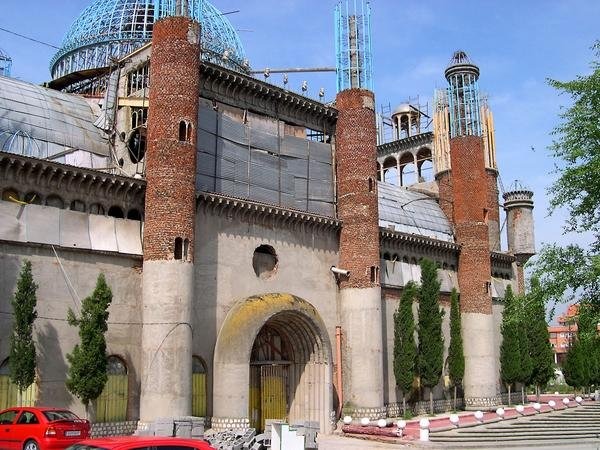
Justo Gallego Martínez began constructing a massive cathedral in Mejorada del Campo near Madrid, Spain, in 1961. After contracting tuberculosis, the former Trappist monk vowed to build a house of God if he survived. Operating without formal architectural training, blueprints, or municipal permits, Gallego spent decades assembling the massive structure. He gathered discarded oil drums, scrap bricks, and leftover cement from local construction projects to form the walls.
#31 Cathedral of Maringa (Parana, Brazil)
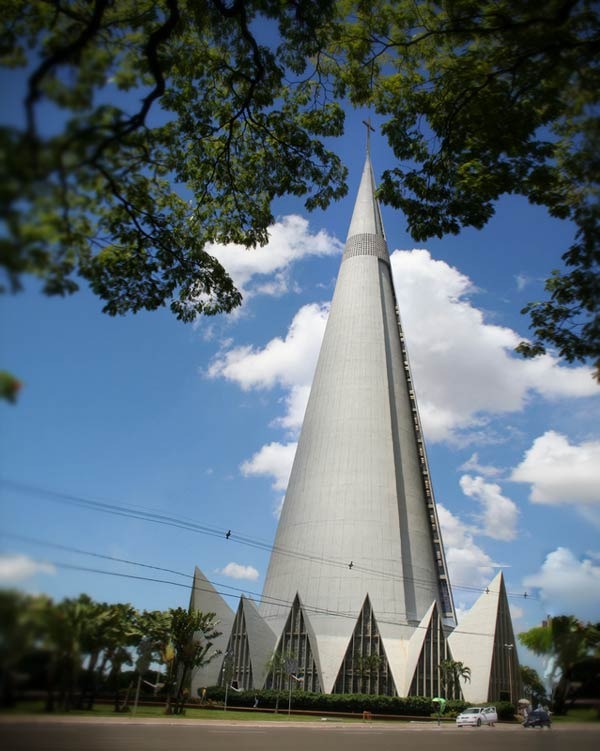
Architect José Augusto Bellucci designed the Cathedral of Maringá in Paraná, Brazil, drawing inspiration from Soviet Sputnik satellites. Construction lasted from 1959 to 1972, producing the tallest church structure in South America. The modern concrete cone reaches 124 meters into the sky, topped by a seven-meter iron cross. The base holds space for thousands of worshippers under a minimalist interior lit by narrow vertical stained-glass strips.
#32 Salt Cathedral of Zipaquira, (Cundinamarca, Colombia)
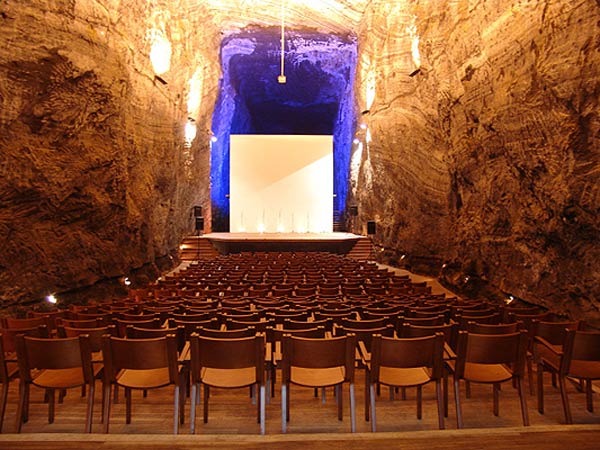
Miners carved the Salt Cathedral of Zipaquirá two hundred meters underground within the halite deposits of Cundinamarca, Colombia. Workers hollowed out former salt extraction tunnels in 1954 to build a subterranean sanctuary where miners prayed for safety before shifts. Structural instability forced authorities to close the original site in 1990. Engineers opened a brand-new cathedral forty meters below the original layout during 1995.
#33 Bruder Klaus Chapel (Mechernich, southern Germany)
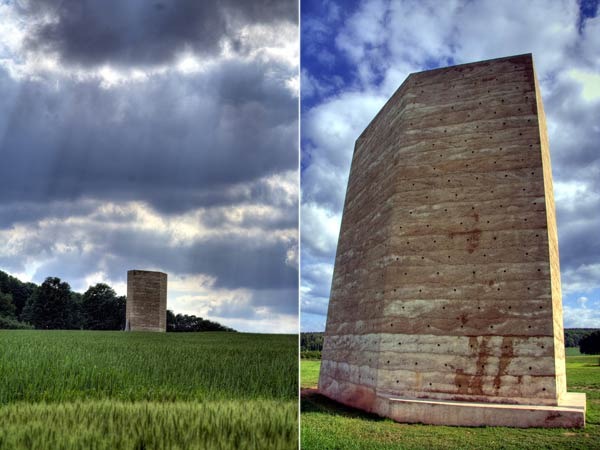
Architect Peter Zumthor built the Bruder Klaus Field Chapel near Mechernich, Germany, in 2007 for local farmer Hermann-Josef Scheidtweiler. Builders erected a wigwam frame out of 112 pine trunks before pouring twenty-three layers of concrete around the timber structure. Workers then set a slow fire inside the wooden core for three weeks, burning away the interior logs to reveal charred, textured concrete walls.
#34 Written Stone (Monastery, Romania)
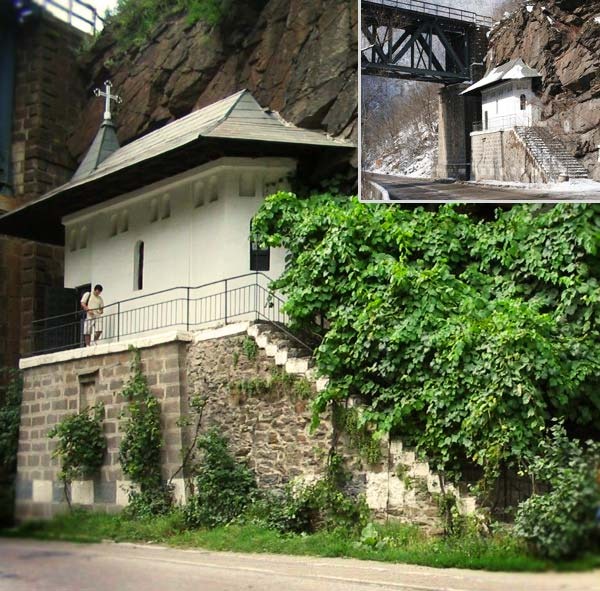
The Written Stone Monastery sits against a forested slope in Caraș-Severin County, Romania. Local historical records trace the sanctuary to an icon of the Holy Trinity painted on a rock face alongside the Timiș River. Tradition claims an engineer spared the painted cliff face while blasting stone for a new railway line in 1929, prompting local Orthodox believers to erect a protective chapel directly around the rock.
#35 Church of St. George(Lalibela, Ethiopia)
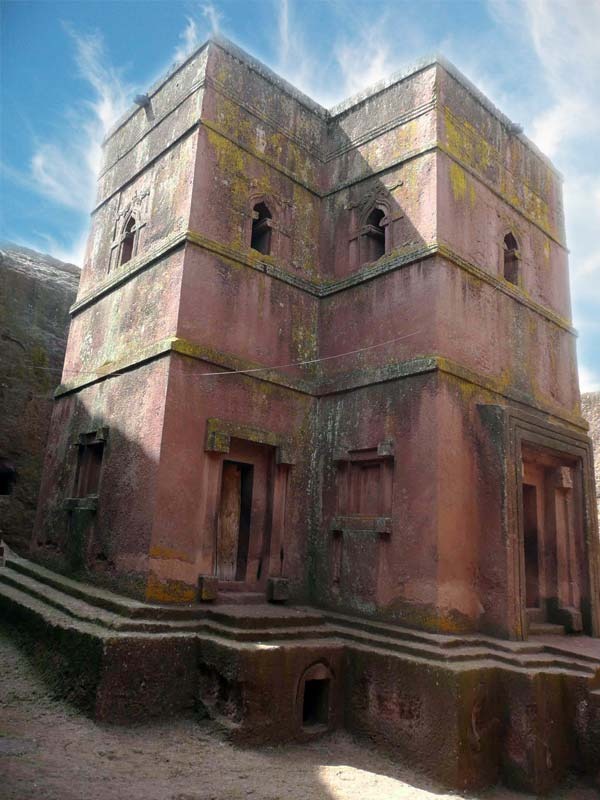
A subterranean trench and rock-cut staircase lead visitors down into the sunken courtyard of the Church of St. George in Lalibela. The interior houses carved altars, heavy stone pillars, and ancient religious manuscripts maintained by Orthodox priests. Rainwater channels carved into the top roof step divert monsoon runoff into deep cisterns below, protecting the soft volcanic rock from erosion for over eight centuries.
#36 Trendsetters Church (Phoenix, AZ, USA)
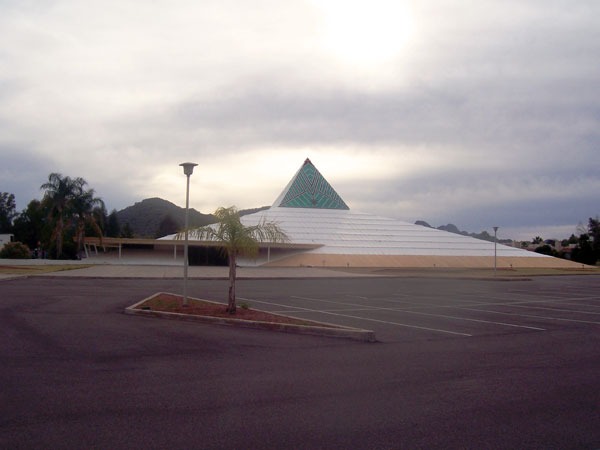
Architect Neil Wright designed the modern sanctuary for Trendsetters Church in Phoenix, Arizona, incorporating bold mid-century geometric shapes into the desert landscape. Completed during the height of post-war suburban expansion, the structure features dramatic angled rooflines made from reinforced steel and poured concrete. The wide footprint accommodated large evangelical congregations shifting out of downtown church buildings toward modern automobile-accessible suburbs.
#37 Chapel in the Rock (Arizona, USA)
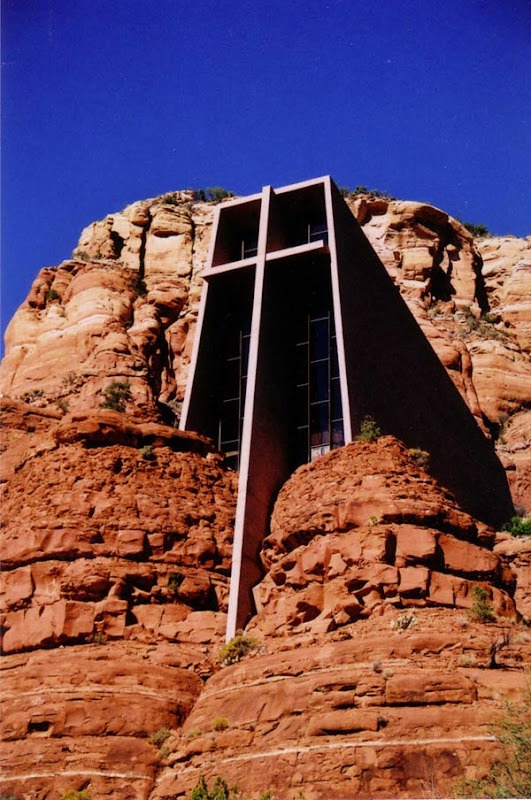
Student Richard Hein designed the Chapel of the Holy Cross in Sedona, Arizona, under the supervision of Frank Lloyd Wright associate Marguerite Brunswig Staude. Workers finished construction in 1956, pinning the concrete structure between two red rock bluffs. A massive ninety-foot cross serves as both structural support and front facade, anchoring the building into a rock face rising two hundred feet above the high desert floor.
#38 The Wireman Chapel at Eckerd College (St. Petersburg, Florida, USA)
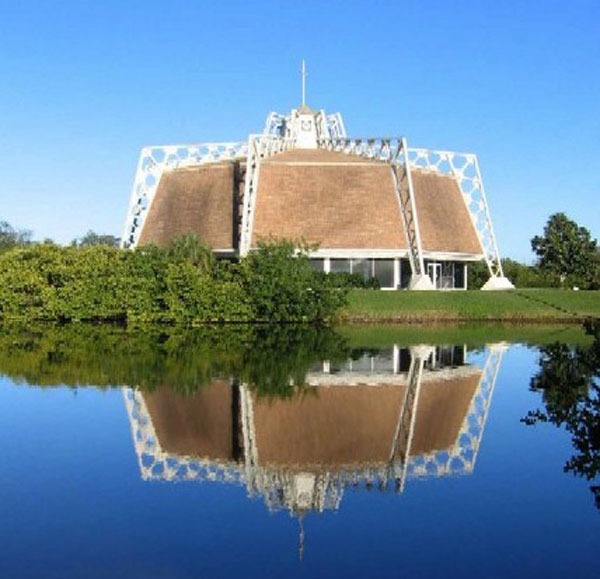
Architect Philip Johnson designed the Wireman Chapel at Eckerd College in St. Petersburg, Florida, completing it in 1968. The circular structure sits surrounded by water on a quiet campus lagoon. Johnson used thin prestressed concrete columns and full-height fiberglass panels to allow natural sunlight to filter into the central sanctuary, creating a bright interior space intended for interfaith student gatherings and musical performances.
#39 Saint-Michel d’Aiguilhe chapel (Le Puy-en-Velay, France)
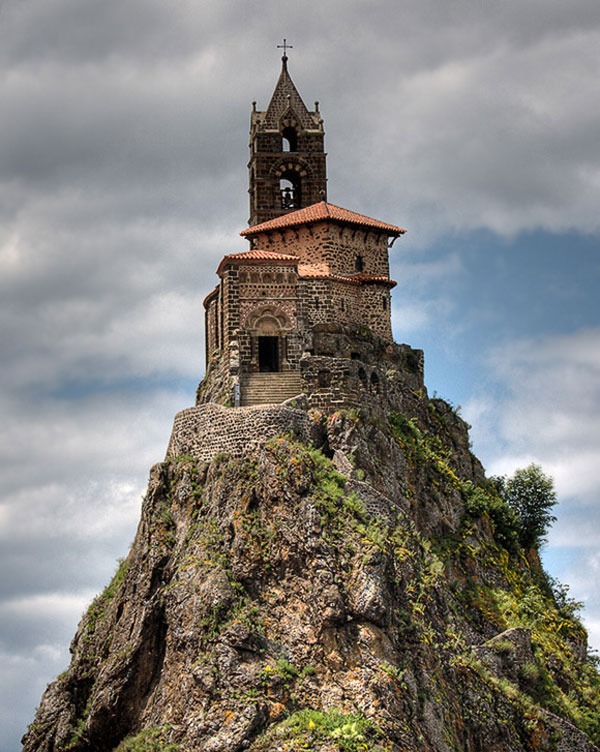
Construction workers raised the chapel of Saint-Michel d'Aiguilhe in 962 AD atop a volcanic needle 85 meters high in Le Puy-en-Velay, France. Bishop Godescalc ordered the building to celebrate the return of pilgrims from Saint James of Compostela. Visitors climb 268 stone steps carved directly into the steep rock pillar to reach the sanctuary, which features polychrome stone masonry influenced by Moorish designs.
#40 Santuario Madonna della Lacrime (Sicily, Italy)
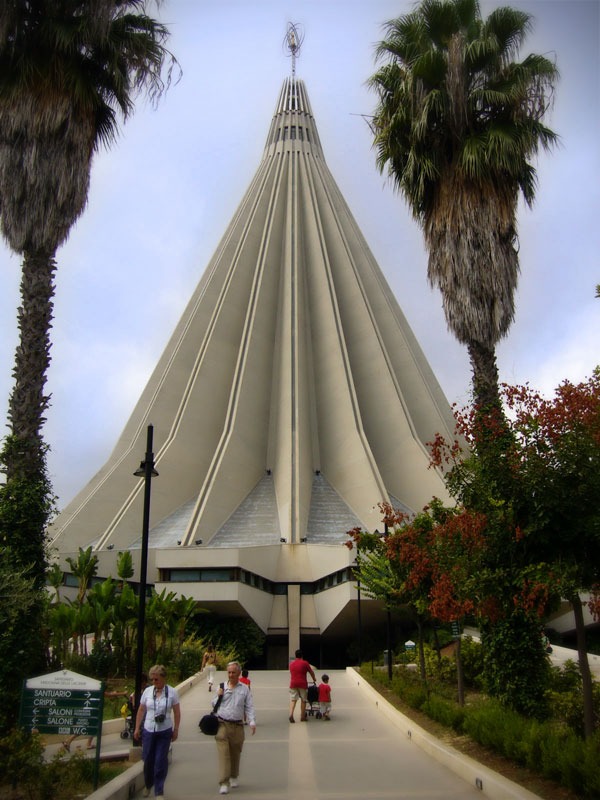
Architects Michel Andrault and Pierre Parat designed the Sanctuary of Our Lady of Tears in Syracuse, Sicily, completing it in 1994. The massive conical concrete structure reaches 74 meters into the air, dominating the city skyline. The parish built the shrine to house an plaster icon of the Virgin Mary that reportedly wept tears for four days in 1953, drawing millions of Catholic pilgrims.
#41 The Hermitage (Island of San Juan de Gaztelugatxe, Spain)
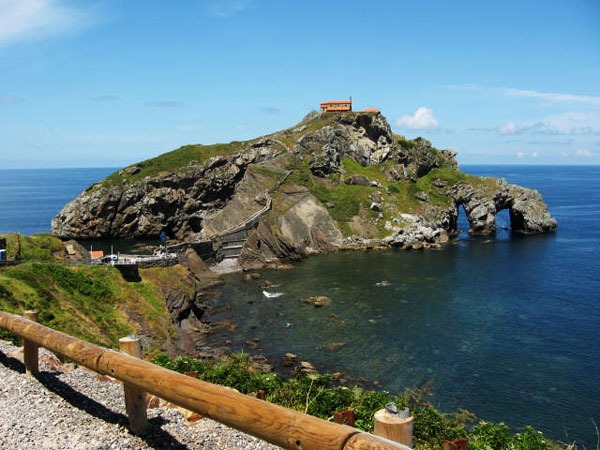
The Hermitage of San Juan de Gaztelugatxe sits perched on an islet off the coast of Biscay in Basque Country, Spain. Knights Templar built the original chapel during the tenth century to secure the strategic coastline. Visitors cross a narrow stone bridge built over the ocean waves and climb 237 steps up a zig-zag path to reach the site, which saw naval attacks by Sir Francis Drake in 1589.
#42 Church of Arbore (Suceava County, Romania)
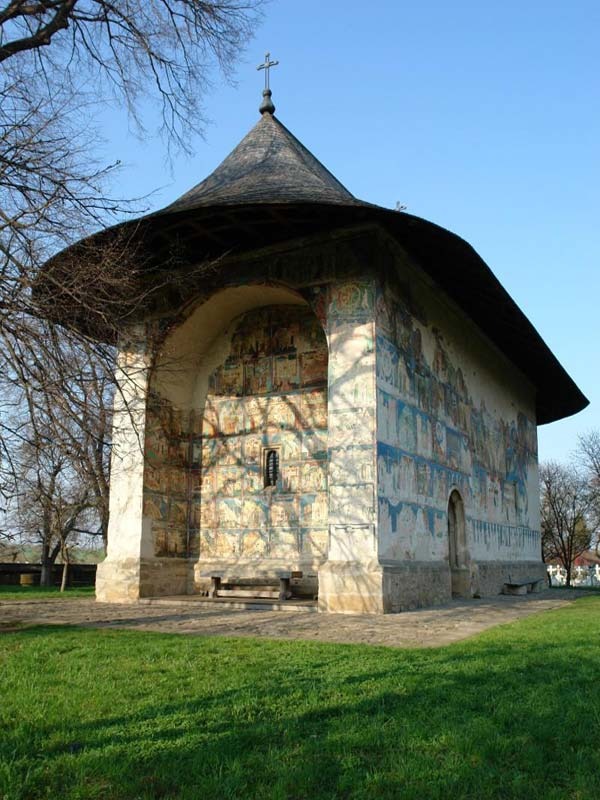
Boyar Luca Arbore commissioned the Church of St. John the Baptist in Suceava County, Romania, in 1503. Masons built the Orthodox church out of brick and fieldstone without traditional bell towers. Artist Dragos Coman painted the exterior walls in 1541, using durable mineral pigments to depict biblical scenes. The colorful frescoes survived centuries of harsh Moldavian winters, preserving historical Byzantine artistic traditions.
#43 The Chapel on the Rock (Allenspark, Colorado, USA)
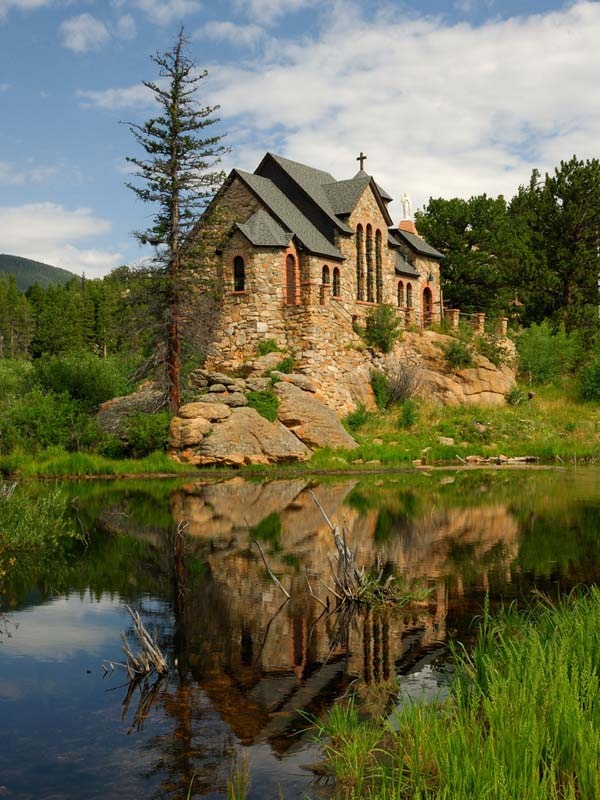
William Saint Joseph Barrett commissioned the Chapel on the Rock in Allenspark, Colorado, following a visit to the site in 1916. Architect Jacques Benedict designed the stone chapel, which was completed in 1936 atop a natural rock formation. Pope John Paul II visited the site for personal prayer during World Year of Youth celebrations in 1993, bringing international recognition to the small Rocky Mountain landmark.
#44 Cadet Chapel (Air Force Academy, Colorado, USA)
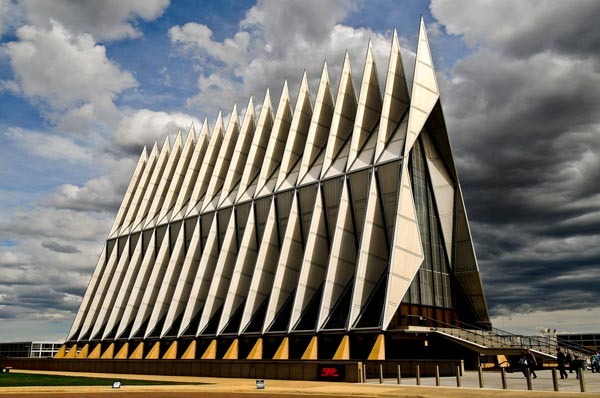
Architect Walter Netsch of Skidmore, Owings & Merrill designed the Cadet Chapel at the Air Force Academy near Colorado Springs, completed in 1962. The structure features seventeen towering spires made from a frame of 100 tubular steel tetrahedrons clad in aluminum panels. The interior houses distinct worship spaces for Protestant, Catholic, Jewish, and Buddhist cadets, separating them across two levels under colored glass windows.
#45 St. Augustine Church (Brookland, Kent, UK)
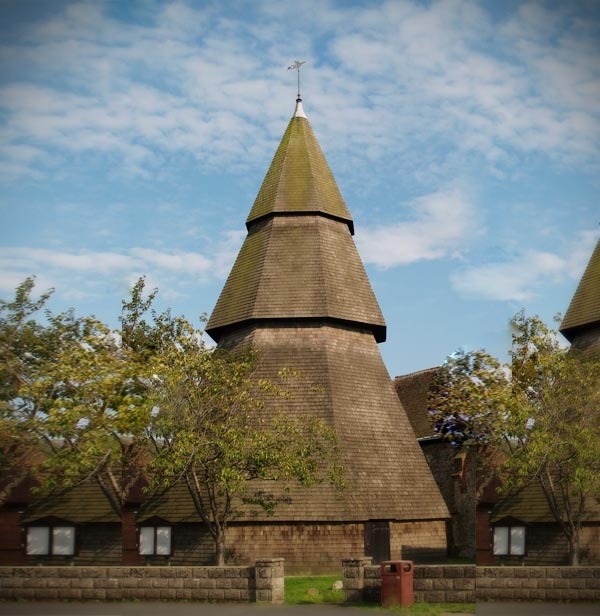
Masons built St. Augustine Church in Brookland, Kent, during the thirteenth century across low-lying marshlands. The parish added a detached wooden bell tower around 1250, constructed on a heavy timber frame sitting directly on the ground. Local carpenters wrapped the exterior base in dark weatherboarding and topped it with three octagonal shingled roofs to protect the heavy swinging bronze bells from sea winds.
#46 Third Church of Christ, Scientist (Washington, DC, USA)
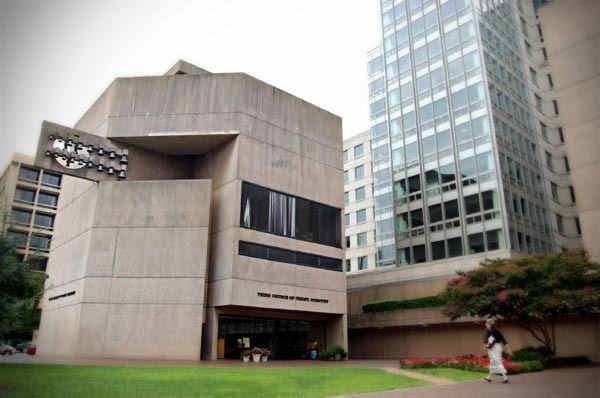
Architect Araldo Cossutta of I.M. Pei & Partners designed the Third Church of Christ, Scientist, in Washington, D.C., completing it in 1971. Built in the Brutalist architectural style, the church featured raw pouring concrete and bold geometric masses. Despite opposition from local historic preservation groups, the church congregation secured permission to demolish the building in 2014 due to costly structural decay.
#47 Thorncrown Chapel (Eureka Springs, AR, USA)
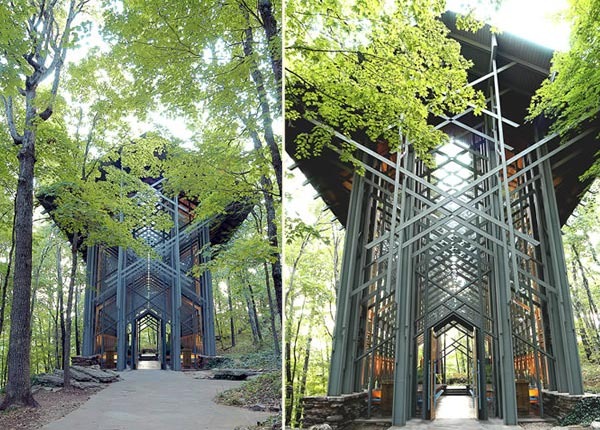
Architect E. Fay Jones designed Thorncrown Chapel, hidden in the Ozark mountains near Eureka Springs, Arkansas, opening it in 1980. Jones used local pine timber, stone, and glass to construct an open lattice structure that blends directly into the surrounding forest. The forty-eight-foot-high pavilion contains over 6,000 square feet of glass supported by crisscrossing wood trusses built entirely from hand-carried materials.
#48 Church Birdhouse (Greer, South Carolina, USA)
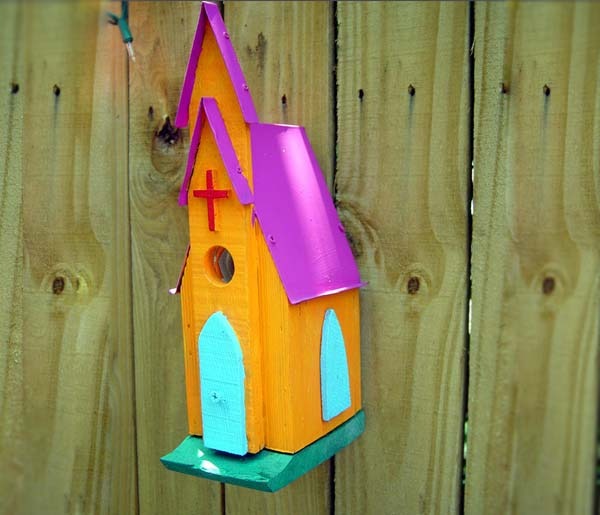
Local folk artist James Allen constructed an elaborate miniature church birdhouse in Greer, South Carolina, using reclaimed cedar shingles and scrap wood. The detailed structure features tiny stained glass windows, framed entries, and scaled bell towers designed to shelter local songbirds. Allen built dozens of outdoor bird sanctuaries across his rural property, reflecting traditional Southern countryside crafting techniques passed down through generations.
#49 Guess what it is
Cross-shaped architecture takes many forms in structural engineering, from ancient monolithic rock excavation to modern reinforced concrete pours. Builders through history adapted regional stones, clay, timber, and metallic alloys to construct elevated sanctuaries on mountain cliffs and in subterranean salt caverns. These engineering feats continue to document regional religious traditions, changing architectural theories, and community investment across every inhabited continent.